Wednesday, 11 January 2017

LIBYA AND TRUMP

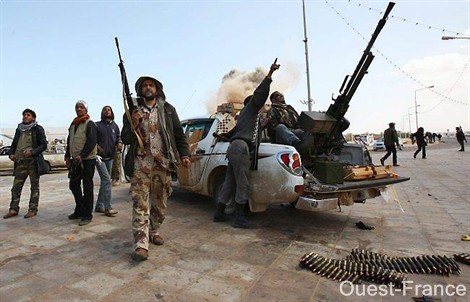
Surprising as it may be stateside, U.S. President-elect Donald Trump is wildly popular in Libya. Since 2014, the civil war in Libya has been in a stalemate as rival factions, including the UN-backed Government of National Accord (GNA) in Tripoli and the House of Representatives in Tobruk, each backed by an assortment of militias, fight for control. 
In 2015, things looked particularly dire in Libya; some cities have fallen entirely under jihadi control and most of the country’s oil terminals had been taken offline. But since mid-2016, there have been some positive developments too: Libya’s oil production is rebounding and the Islamic State (ISIS) has been evicted from Sirte, which was its largest patch of territory outside of Iraq and Syria. But the political roadblocks to reconciliation remain. A new war is brewing in Libya’s south and the GNA is on the verge of collapse. On January 2, its deputy prime minister, Musa al-Koni, resigned live on Libyan television. The next day, the Libyan National Army (LNA), which is aligned with the House of Representatives in Tobruk, bombed a civilian aircraft in Jufra airbase that was transporting senior officers from Misrata, which is home to militias that support the UN-backed government. This is a dangerous escalation and is likely to prompt extensive counterattacks.
The moment is truly ripe for alternative mediation efforts—outside of the existing UN framework. For the last few months, the LNA and forces aligned with it have finally gained control of the oil fields, pipelines, and terminals, which are needed for Libya to pump its way to something approaching financial solvency. These developments are wildly popular even among Libyans opposed to the LNA and the House of Representatives. Faced with an east consolidating around the LNA, the western factions, including the Misratans, have an incentive to come to the table now before their position degrades further. The LNA, on the other hand, can now pump oil via its behind-the-scenes deal with the National Oil Corporation and thus, has limited incentive to push a bloody fight for Tripoli if negotiations are a possibility. Trump should seize the opportunity as he has the potential to shift the dynamic in previously unimaginable ways. 
At least initially, Trump will find it fairly easy to engage a wide range of local actors. Supporters of Libya’s most powerful military figure, Field Marshall Khalifa Haftar—who heads the LNA and is backed by both Russia and Egypt—believe that Trump will favor them as part of his new administration’s geostrategic realignment toward Russia. Conversely, opponents of Haftar, who are tired of the stagnant negotiations with the UN-backed unity government, believe that Trump may breathe fresh life into the talks or else pursue more effective alternatives to building a functioning government, eradicate what remains of ISIS, and find new ways to jumpstart the Libyan economy.
In short, at least on the Libyan streets, Trump comes into office far more popular than a President-elect Hillary Clinton would have been. The former secretary of state’s emissaries are associated with the status quo and with the Misratan faction. Furthermore, few areas of the world were more neglected during President Barack Obama’s second term than Libya. Yes, Washington was instrumental in coordinating the airstrikes that ousted ISIS from its stronghold in Sirte. But the United States has failed to exert leadership over the political and economic aspects of Libya’s transition.
There is good reason for the Trump administration to pay attention to Libya sooner rather than later, as the conflict is evolving in ways that threaten U.S. interests. Neighboring states such as Algeria, Egypt, and Tunisia, are facing contagion from Libya’s ongoing civil war, increasing the chance that what remains of ISIS’ faction in Libya will flee and entrench itself elsewhere in the Maghreb. Russia is providing ever more political support to Haftar and could easily outflank Western policymakers by recognizing him and his allies in the House of Representatives as Libya’s legitimate government. This could create another frozen conflict or else end with a Russian-backed regime over all of Libya. Although Trump appears capable of making a broad geostrategic deal with Russia, there is no reason to think he wants to give Moscow more leverage before such a deal is made.
But Washington still has leverage—if it chooses to use it. Only the United States can offer full entry into the global economy and give international legitimacy to the various Libyan factions. Russia and its ally, Egypt, would only generate dependency and further marginalization.
WHAT WASHINGTON CAN DO
The United States currently recognizes the GNA as the only legitimate government of Libya. Unfortunately, the GNA governs nothing in Libya. Its writ does not even extend to Tripoli, where it is currently situated. It is entirely dependent upon militias to provide its security. Hence, it cannot govern without favoring their interests.
Proposals to prop up this pseudo-government with a foreign armed and trained presidential guard will only add another uncontrollable militia to the mix. Instead, the Trump administration should acknowledge that no faction, including the GNA, has a unique claim to political legitimacy in Libya. Haftar’s LNA and the opposing forces from the city of Misrata comprise the two most powerful blocs. At present, Haftar is consolidating power in the east and south of the country. Although Misratan hegemony over the west is weakening, it remains unlikely that Haftar’s forces can overpower Misrata and the allied militias anytime soon. If developments are left to follow their course, a de facto separation appears likely to calcify. A negotiated power-sharing solution among the militias, rather than the powerless politicians of the GNA or any other pseudo government must be forged from the bottom up.
The United States is vital to such a settlement. It could offer access to international oil markets for Libyan crude and international recognition for any true unity government. It could also hold out the promise of aid for reconstructing the war-torn neighborhoods of communities that join the new order. This cannot happen, however, as long as Washington insists on the GNA as the sole legitimate government to the exclusion of Haftar and others. The rump General National Congress, an interim governing body whose mandate ended in 2014 but continues to assert its legitimacy, and the House of Representatives should be ignored in favor of direct engagement with Haftar’s representatives and moderate Misratan leaders. In Libya, it is the militia leaders, not the politicians, who rule the roost.
And these real military stakeholders are eager to be invited to international conferences. When asked, they have come to Tunis or Geneva to meet with UN officials. They frequently go to Abu Dhabi, Doha, and Moscow to meet their current political patrons. The United States should now engage with them directly. Further, moderate Misratan leaders have shown that they are willing to work with the United States to achieve mutual aims. Washington should ensure that the Misratans, for one, are rewarded for the instrumental part their fighters played in defeating ISIS in Sirte by making sure that their control over their local affairs is not threatened.
The West could also help craft a proposal for political decentralization, since all factions see the current conflict as a zero-sum competition for absolute power in Libya. Devolving most authority to cities (not regions, which has been tried and has failed) along with oil revenue—prorated based on population size—would ease the competition for control of Tripoli. Although it is true that some municipalities are themselves divided, several local conflicts is better than one national conflict or three regional ones. Also, decentralization will help Libyans build local governance capacity—something sorely needed if the country is to rebound economically.
Trump’s signature policy towards Libya should be the appointment of a presidential envoy—akin to the Special Presidential Envoy for the Global Coalition to Counter ISIS, a position currently held by Brett McGurk. Only a presidential envoy can make the United States primus inter pares among Western nations in setting and coordinating policy towards Libya. Up to and until now, the British, French, Italians, and the UN have all exercised leadership in some capacity when it comes to Libya. Washington has only taken control when it comes to airstrikes and counterterror policy. It was a bit player in the negotiations to broker a unity government or to deal with postwar reconstruction. This muddled leadership has led to poorly coordinated and incoherent policy. If the United States wants to end the civil war Libya, it must no longer lead from behind. It must actually lead

Friday, 6 January 2017

WAS GADAFI NOT SO BAD?


The death of Libya

The conflict in Libya is far from over and its consequences do not seem to be limited simply to Libya. Indeed, the night of Sunday 2016, a Turkish cargo from Spain was attacked repeatedly from the Libyan coast, off the port of Tobruk. This attack, which caused the death of a Turkish sailor but also the wrath of Turkey is not an isolated case. Indeed, in January 2015, a Greek tanker was attacked by a Libyan warplane killing two . In addition to this, Libya has become a hotbed of Islamic terrorism receiving fighters from terrorist groups based in Syria and Iraq. All these events are symbolic of the total disintegration of the Libyan state. 
October 20, 2011, Gaddafi was captured alive and then shot dead by members of the rebellion that started in February of the same year. Since then, Libya has descended into chaos. Gaddafi's Libya was obviously not a model of democracy or respect for human rights but the "Revolutionary Guide" has allowed Libya to maintain consistency despite its tribal character and eventful history.
THE END OF THE "SYSTEM Gaddafi" ... 
Gaddafi that reads its Green Paper in which he details his vision of democracy & politics Gaddafi had managed to establish a precarious balance in Libya by a mixture of coercion, redistribution of wealth from oil, clientelism but also through agreements and alliances with most of the Libyan tribes. This is what is called the "Covenant of the Green Paper" .
The tribes played an extremely important role in the Gaddafi regime. Indeed, membership in a tribe could help achieve very favorable social positions. Indeed, Gaddafi had managed to set up a social ladder according to the tribe of belonging. Former Libyan head of state was thus able to control the tribal system by developing alliances games and a wealth redistribution network to consolidate its power. Gaddafi had therefore succeeded in establishing an alliance network built around his own person, but not a real state. In addition, Gaddafi has used a highly developed and brutal repressive apparatus. This unit, composed of the armed branches of some tribes, has benefited from significant capital investment from the regime, allowing it to survive for forty-two years of the "reign" of Gaddafi.
However, the gradual erosion of political, authoritarian but redistributor ended the Gaddafi regime. For if in the 1970s and 1980s, progress has benefited the entire Libyan population in terms of infrastructure but also social aid, the following two decades have seen a slow deterioration of the redistribution system. Thus, Gaddafi's Libya was unable to resist changes in oil prices, the near absence of economic take-off at too undiversified economy, embargoes and waste of resources at too ambitious foreign policy. Finally, the 2008 economic crisis and rising raw material prices during the same period have worsened the situation.
All these elements have led a revival of the tribes. In 2008, several tribes battled them already threatening the unity of the Libyan state. But in 2011, with the Tunisian and Egyptian revolts, tribes regained their original function and some of them were opposed to Gaddafi. So there has been a "retribalisation" of Libyan society.
... A GOOD THING OR A BAD?  Power struggles in Libya
The result of this revolution does not seem to be really positive for Libya. Since the fall of the Libyan leader, the country was crossed by numerous separatism waves. To the east of the country, Cyrenaica region, a federalist movement had emerged quickly after the end of the revolution. To the west, the Berber tribes claimed the recognition of their identity while in the south of the country, the Tuareg and Toubou have also had separatist tendencies.
A real civil war has settled since the end of the Libyan revolution. Indeed, many of the militias "thuwar" (revolutionaries) have benefited from the institutional vacuum left by the fall of the Gaddafi regime. These "heroes of the Libyan revolution" have therefore taken the place of a missing police and army, and control strategic buildings and districts within major Libyan cities, but also some important oil sites.
Finally, the Libyan government appears to have given way to a struggle between various militias, tribes and two self-proclaimed governments. The first, based in Tobruk in the east, the government said "official" as recognized by the international community, and is supported by the army. The second is not recognized by the international community and is based in Tripoli in the west. It is especially supported by the Islamist militia coalition Fajr Libya.
Ultimately, it is clear that Muammar Gaddafi was a dictator disrespectful of human rights. However, the current situation in Libya leads us to wonder about the effects of Western intervention in 2011 . Indeed, if this was necessary to prevent potential massacres of civilians, it is legitimate to question the merits of the decision to slaughter Gaddafi and neglect the reconstruction of Libyan society after the end of the intervention military. Especially since Europe is the first to be hit by the collapse of the Libyan state which has become a hub for illegal immigration  but also of international terrorism.

Sunday, 1 January 2017

IN 6TH YEAR SINCE NATO INTERVENTN . . .

Libya currently has no single, central government, there is no security, oil revenues have halved, and weapons flow out of the country.        In the 6th year since the NATO-led intervention in Libya resulted in the toppling of long-time leader Moammar Gadhafi, the North African country has descended into a noticeably worse position amid political chaos and a growing extremist threat.
                                       
ANALYSIS:                                       
Libya currently has no single government or central authority which controls the whole nation, there is no security, oil revenues are about 1/3, and weapons flow out of the country. Libya is torn apart by a civil war between rival militias which has been raging since 2014, after the internationally-recognized government relocated to Tobruk in the east, with General Khalifa Haftar as top commander of the armed forces, and Libya Dawn – an Islamist-dominated coalition - set up a rival government, known as the new General National Congress (GNC) in Tripoli.
                                       
By the end of February, hopes for peace vanished again after members of the parliament in Tobruk were reportedly "prevented" from voting on the make-up of a new unity government under a U.N.-backed plan aimed at bringing together Libya’s warring factions, which they said they supported. Since it was signed by some elements of the two opposing groups on Dec. 17, 2015, in Morocco, the U.N. plan has been opposed by hard-liners on both sides and suffered repeated delays.
                                       
Not even the logic of a power-sharing agreement has worked, said Dr. Khaled Hanafy Aly, a researcher in African affairs at Al-Ahram Center, referring to the peace deal that followed other U.N.-mediated efforts at creating a Government of National Agreement (GNA).
                                       
According to Karim Mezran, there are a few thousand militias fighting each other, each linked with some political attache. "Fragmentation" is the first word that comes into his mind to define the situation in Libya. The senior fellow described the country’s political outlook by first noting that in the east, while the majority within the parliament backs the U.N. accord, other lawmakers alongside powerful army chief General Haftar oppose the deal.
                                       
"A large number of parliamentarians in Tobruk would be happy to have the unity cabinet, but Gen. Haftar keeps pushing for a military solution, not a political one," said Mezran, who is also professor at the School of Advanced International Studies at Johns Hopkins University. "Haftar and his allies are the strongest voices, and they’re the ones who can spoil the agreement," he added.
                                       
In the west, the head and members of the rival Tripoli-based GNC also oppose the deal. Its affiliated government, led by Prime Minister Khalifa al-Ghweil, has no intention of relinquishing power to the new GNA, as the Middle East fellow hinted.
                                       
To add to this, a third government led by Faiz Siraj hangs over the two rival administrations, which has the backing of Western powers. However, it is not recognized by any of the major powers inside Libya, and the international community looks paralyzed on what to do.
"The problem is not only the multiplicity of governments but the impasse in which conflicting interests make the existence of a central government difficult," Dr. Ali stated.
                                       
In the midst is the Islamic State group, which has capitalized on the power and security vacuum to set a foothold in Libya by establishing its presence around the central coastal city of Sirte, hometown of former Libyan leader Gadhafi. The extremist group has briefly seized territory in Sabratha, between Tripoli and the Tunisian border, and threatens to destroy what’s left of the country.
                                       
For Ali, the Islamic State group merely feeds on the east-west divisions without which it would be doomed to failure. He believes social and tribal grievances on the ground need to be addressed properly in order to prevent and stop affiliation of local militants with the group.
                                       
Yet, with media reports giving inflated numbers of Libyan fighters who have fallen to Islamic State group ranks, joined by foreign jihadists coming from Tunisia, Egypt, Somalia, Sudan and elsewhere, the group’s strength in Libya has been somewhat overestimated.
                                       
In Mezran’s view, the Islamic State group threatens more that territorial gain; it intends to completely destabilize Africa’s oil rich state. "It’s by no means territorial expansion in Libya," he argued. "ISIS’ (Islamic State Group) strategy there is to have a base where from it launches sporadic attacks to hit oil fields and Libyan cities like Tripoli and Benghazi."
                                       
The professor specified that the Islamic State group aims to destroy, not conquer, Libya’s oil facilities so as to prevent any possibility for a recognized government to draw from the oil industry, the key pillar of Libya’s economy, as well as reconstitute a state army and rebuild the country.
                                       
Libya’s oil production has collapsed to around 30 percent of its 2011 level. The country is at its most critical juncture since the overthrow of the Gadhafi regime with Central Bank reserves dwindling. Caught in the instability, the average Libyan has to put up with increased prices, lengthy fuel and power cuts and medicine shortages.
                                       
Libya is largely a quasi-failed state. "It’s not one big mess, it’s a whole set of many messes," Rafik Hariri Center observed. "There are institutions functioning in certain areas, then it’s total anarchy in other parts of the country."
                                       
Libya has also turned into a battleground for foreign powers, with Egypt and the United Arab Emirates, the UAE, giving open military backing to Haftar’s armed forces while Turkey, Qatar and Sudan are believed to have helped arm the Libya Dawn forces in Misrata.
                                       
For their part, Western governments, namely the U.S., Germany, the U.K., France and Italy have been considering direct military intervention against the Islamic State group in Libya. The new unity government, which Washington and its European allies are pushing to ratify, would effectively have the authority to call in international support, paving the way for a new NATO-led military intervention in Libya under the pretext of combating the Islamic State group.                          "The West bears responsibility for today’s Libyan crisis," the Al-Ahram Center researcher pointed out. "Failing to secure the country after Gadhafi’s death and disarm militias has turned Libya into a lawless state."
                                       
Dr. Ali maintained that Libya today poses a threat to regional security. In his opinion, nonetheless, another foreign intervention will attract many risks for two main reasons. The Libyan elite does not seem keen on inviting foreign military forces. Second, an international operation may create more problems than intended and could lead to an even more complex scenario.
                                       
Mezran thinks the Libyan crisis needs to be resolved before fighting the Islamic State group, which, he feels, should not be overblown as "the issue." "If [the] Western approach is just to hit ISIS (Islamic State Group) and forget what goes on in Libya, they’re trying to kill an octopus," the senior researcher noted.
                                       
Five years after the NATO intervention in Libya, which created a genuine disaster, another intervention is being prepared against the North African state. Whether that will materialize or not, failure to achieve political unity with an inclusive, participatory approach, could risk turning Libya into a failed state in future.

Saturday, 31 December 2016

EUROPA & ITALIAN POLITICS

E U R O P A
SPESSO mi chiedo dove e come è nato l’Occidente, la sua cultura, la sua potenza ed anche le sue debolezze; ma non so rispondere. Senza dubbio è nato in Europa ma quando e come? La storia e perfino la preistoria non lo dicono; le religioni neppure. Il mito forse. Sì, il mito lo dice.

Queste cose pensavo mentre stavo leggendo un libro sulla mitologia; ce ne sono molti e mi hanno sempre attirato. Colgono il profondo dell’animo nostro e lo mettono in luce, come le sue contraddizioni che cambiano sempre ma sempre ci sono, si scontrano ma non si spengono, fanno parte della nostra specie di uomini che guardano se stessi mentre operano, giudicano se stessi e così nasce l’Io e con esso il desiderio del potere, la sua trascendenza.

Il libro di mitologia che meglio affronta questo tema l’ha scritto pochi mesi fa Paola Mastrocola. Si intitola L’amore prima di noi. Prima di affrontare i problemi reali che dobbiamo risolvere, voglio soffermarmi sul loro aspetto mitico. Poi scenderemo a quelli reali. Dalle stelle alla terra. C’è sempre il filo di Arianna che può farci uscire dal labirinto nel quale oggi il mondo si trova.

«Un giorno Zeus guardava il mondo sotto di sé. Il suo sguardo si era posato per caso su una fanciulla che si chiamava Europa perché aveva gli occhi grandi. Rimase incantato a guardarla. Poco dopo sulla spiaggia della costa fenicia comparve un toro straordinariamente bianco».

«Le ragazze che danzavano sulla spiaggia furono curiose di quel toro straordinariamente bianco. Erano estremamente incuriosite. Il toro si fermò a grande a distanza e continuò a guardare soprattutto Europa dagli occhi grandi. Fu lei ad avvicinarsi. Il toro aspettava e lei arrivò vicina e lo carezzò. Per gioco gli montò sul dorso e lui partì. Entrò in mare al galoppo, superò le onde in un attimo, prese il largo mentre Europa, avvinghiata alle sue corna chiedeva aiuto. Le compagne guardavano mute ma non potevano far nulla. Il toro era ormai in mare aperto, s’involava spariva e riemergeva.

Zeus ebbe da Europa tre figli e le lasciò una lancia che non sbagliava il bersaglio. Uno di loro si chiamò Minosse, che fece costruire nel suo regno il labirinto. L’Europa di allora si chiamò Europa, colei che ha gli occhi grandi. Così da una fanciulla d’Oriente nacque l’Occidente ».

Questo è tutto. Ce n’è abbastanza per riflettere.

A me piacerebbe che sul significato di questa scena mitologica riflettessero le persone d’autorità investite, a cominciare dal presidente della Repubblica, Sergio Mattarella, il presidente della Corte costituzionale Paolo Grossi, il presidente del Consiglio Paolo Gentiloni, il capo del partito di maggioranza Matteo Renzi ed anche, a suo modo, Silvio Berlusconi. Di altri non parlo, pensano ad esistere e seguono soltanto questa necessità.

L’Italia e chi la rappresenta in Europa e nel mondo provengono in qualche modo dal figlio che lo Zeus mitologico lasciò ad Europa e da questo non possiamo prescindere. Come pure dobbiamo capire qual è il filo di Arianna per uscire dal labirinto in cui l’Italia e l’Europa si trovano. Temo per esempio che Renzi abbia sbagliato a respingere la proposta di Mattarella a tenere in vita il suo governo e far nascere in sua vece un governo burattino del quale vuole essere il burattinaio. Così pure credo che sarebbe molto opportuno se Gentiloni tagliasse i fili del burattinaio e avesse il governo che pensa e durasse fino alla fine della legislatura. Temo anche che la diffidenza interna del Pd continui a fare il gioco dei tanti galli che si disputano la sola gallina del pollaio invece di volare alto insieme al segretario. Temo infine che, tranne Mattarella, nessuno abbia capito quali sono i reali interessi del Paese e dell’Europa della quale facciamo parte integrante.

La sinistra, non soltanto quella italiana, dovrebbe porsi due fondamentali obiettivi: modernizzare il proprio modo d’essere aggiornandolo secondo i nuovi bisogni della società e conquistare un ruolo di governo sia in Italia sia in Europa. La guerra nel pollaio è miserevole, dividersi in correnti è altrettanto miserevole, ma purtroppo continuano tutti, dal segretario Renzi fino all’ultimo militante del partito. Questi fin qui esposti sono temi essenziali, ma non sono i soli. Ci sono le riforme e la politica sociale, c’è la legge elettorale e i problemi nati dal bicameralismo ridiventato perfetto con le esigenze che porta con sé. Ne abbiamo più volte parlato da queste pagine ma vale la pena di riparlarne ancora in un mondo che ormai cambia con molta velocità, in una società globale che cambia anch’essa a dir poco ogni mese se non addirittura ogni giorno. Dunque esaminiamoli questi aspetti della situazione e ciò che compete a chi è chiamato a risolverli.

La politica sociale di una sinistra moderna ha due compiti principali: aumentare la produttività ed abolire o almeno diminuire le diseguaglianze. La discussione non è quella attualmente in corso di accrescere le imposte oppure le spese o viceversa; imposte e spese sono certamente strumenti necessari ma l’obiettivo principale è la diseguaglianza che significa sostanzialmente una costante e crescente differenza tra ricchi e poveri.

Questa differenza fa sì che il numero dei ricchi diminuisca ma la ricchezza di ciascuno di loro aumenti mentre specularmente il numero dei poveri e dei meno abbienti aumenta insieme alla loro povertà soprattutto per quanto riguarda il cosiddetto ceto medio. Non esiste quasi più il ceto medio e chi ancora ne fa parte ha il timore di diventare proletariato, questa è la situazione, uno dei fattori d’una dilagante rabbia sociale che alligna in tutti i Paesi del mondo a cominciare dagli Stati Uniti d’America, dove il fenomeno ha determinato la vittoria di Donald Trump, e così pure in Inghilterra e minaccia in Germania la cancelliera Angela Merkel e spiega anche la vera causa della nascita del Movimento 5 Stelle in Italia. La diseguaglianza, è questo che dobbiamo combattere. Per quanto riguarda la produttività anche i lavoratori debbono contribuire ma marginalmente. Sono soprattutto gli imprenditori che debbono perfezionare i loro investimenti ma debbono anche inventare nuovi prodotti da offrire ai consumatori. La domanda di consumi dipende da molti fattori ma principalmente da nuovi prodotti offerti. Si veda il fenomeno che la storia dell’industria ci offrì nei primi anni del Novecento: il motore a scoppio e l’automobile. Le prime automobili furono un prodotto di lusso riservato ai ricchi. Comunque un nuovo prodotto che gradualmente sostituì le carrozze trainate da cavalli o da muli. Ma poi accanto alle auto di lusso di grande cilindrata usate anche per le gare sportive, nacque ad un certo punto l’automobile piccola, alla portata dei ceti medi e questa fu l’auto di massa che ebbe una grande diffusione. Nelle città diventò anche la seconda automobile dei ricchi per circolare e posteggiare con maggiore facilità. Adesso sta addirittura nascendo un’auto senza pilota, che marcia da sola e da sola posteggia. L’autista guida accendendo il computer, che poi pensa a tutto il resto.

Questo è il vero aumento della produttività di cui viene anche a godere il salario dei lavoratori dipendenti e di conseguenza anche i consumatori.

Noi qui in Italia facciamo assai poco in questa direzione perché la maggior parte degli imprenditori, se il loro profitto aumenta, invece di riconvertirlo in buona parte, lo tengono per sé e lo investono nella finanza invece che nell’industria. Qui dovrebbero intervenire le imposte o le tasse per punire questo comportamento dei capi delle imprese, ma abbiamo visto ben poco di questa politica fiscale.

Dovremo ora parlare della legge elettorale dopo il No referendario che ripristinando il Senato deve necessariamente esser rifatta dal Parlamento su proposta del governo e/o dai partiti. Ci sono due alternative: una legge sostanzialmente maggioritaria come era l’Italicum, con premio alto, il 40 per cento, oppure una legge proporzionale senza ballottaggio ma eventualmente con un premio di maggioranza per il partito con maggiori voti degli altri. Oppure una via di mezzo tra queste due ipotesi.

Personalmente ritengo che una legge proporzionale con o senza premio sia migliore della maggioritaria. Si obietta (Renzi soprattutto) che la proporzionale frantuma il Parlamento e in tal modo indebolisce la governabilità. Questa obiezione è fondata ma il modo di superarla è la coalizione tra due o più partiti. Molte volte ho richiamato a questo proposito la storia della Democrazia cristiana da Alcide De Gasperi fino alla morte di Aldo Moro. Vigeva la proporzionale e non c’era alcun premio, e le coalizioni si formavano dopo le elezioni. Si rilegga quella legge. Tra l’altro essa può essere entro certi limiti modificata adottando un voto di collegio o uninominale, ma la base di fondo è in ogni caso proporzionale.

È vero che questo tipo di legge alimenterebbe le correnti dentro i partiti, soprattutto in quelli maggiori, ma questo avviene anche adesso, perfino nel movimento grillino. Ormai le correnti ci sono anche lì sebbene sia un movimento di proprietà di Grillo e di Casaleggio.

Questo è comunque il mio parere che ovviamente non conta niente in materie di questo genere.